
As a culinary nutritionist, I know that the magic of fermentation goes beyond the tangy flavor of sauerkraut—it’s about the time and patience required to transform cabbage into a nutrient-dense, gut-boosting powerhouse. A common question for fermenters is: How long should I ferment sauerkraut for the best flavor, texture and nutrients?
While there isn’t a fixed answer, understanding how long to ferment sauerkraut and the stages of the process is key to achieving your optimal fermented sauerkraut, everytime.
How long does it take to ferment sauerkraut?
So for those that are here for a quick answer. Under normal conditions, the fermentation is essentially complete within 2 weeks, with the most-acid-tolerant species, Lactobacillus plantarum, predominating.
If you’re interested in learning about the phases, including the taste and texture as it progresses, read on…
Fermenting sauerkraut is a centuries-old practice that turns humble cabbage into a tangy, probiotic-rich superfood. The key to this transformation lies in the natural succession of beneficial bacteria, each contributing to flavor, texture, and gut health at different stages. Understanding how long to ferment sauerkraut and the phases involved can help you achieve the perfect balance of taste and nutrients in every batch.
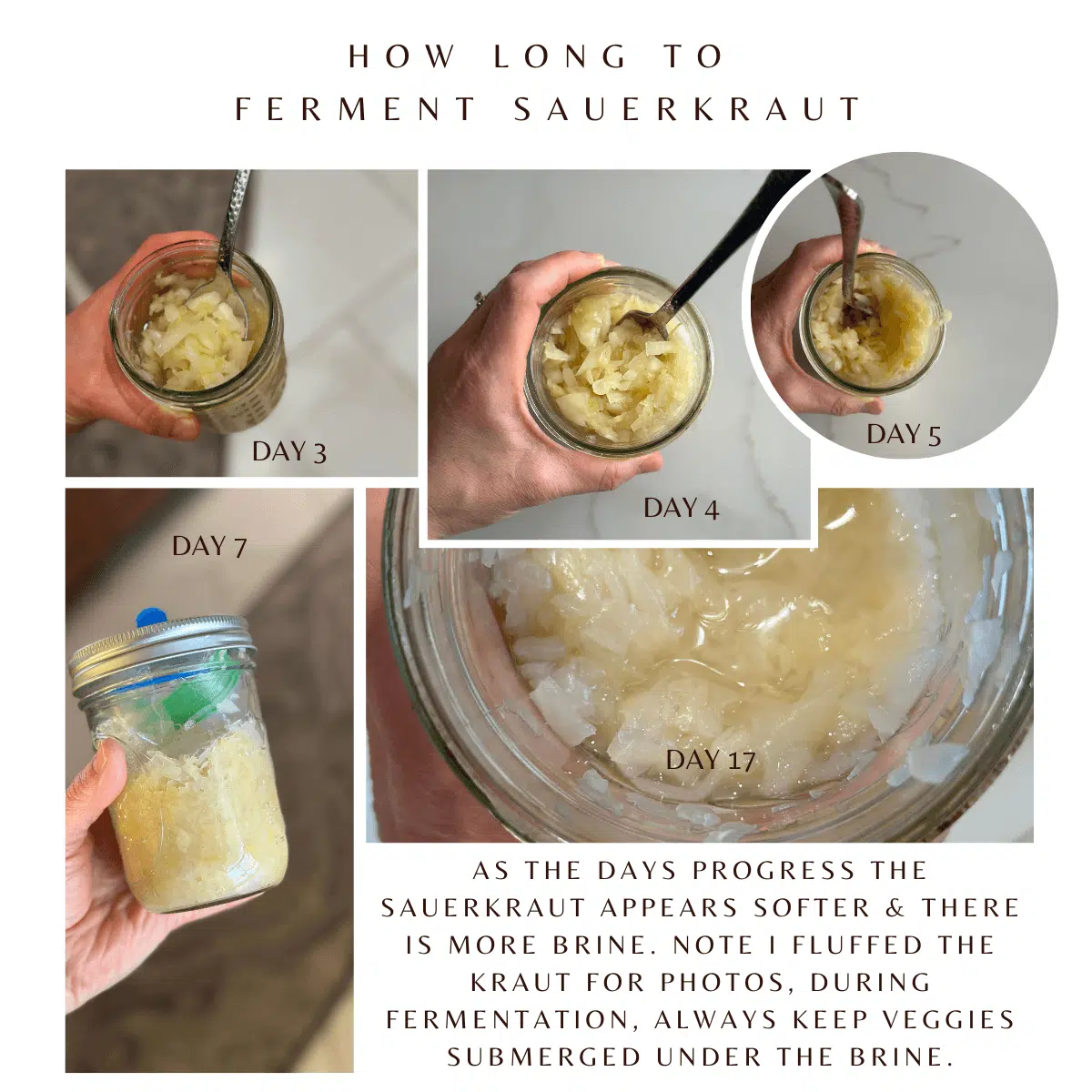
Phases of sauerkraut fermentation explained
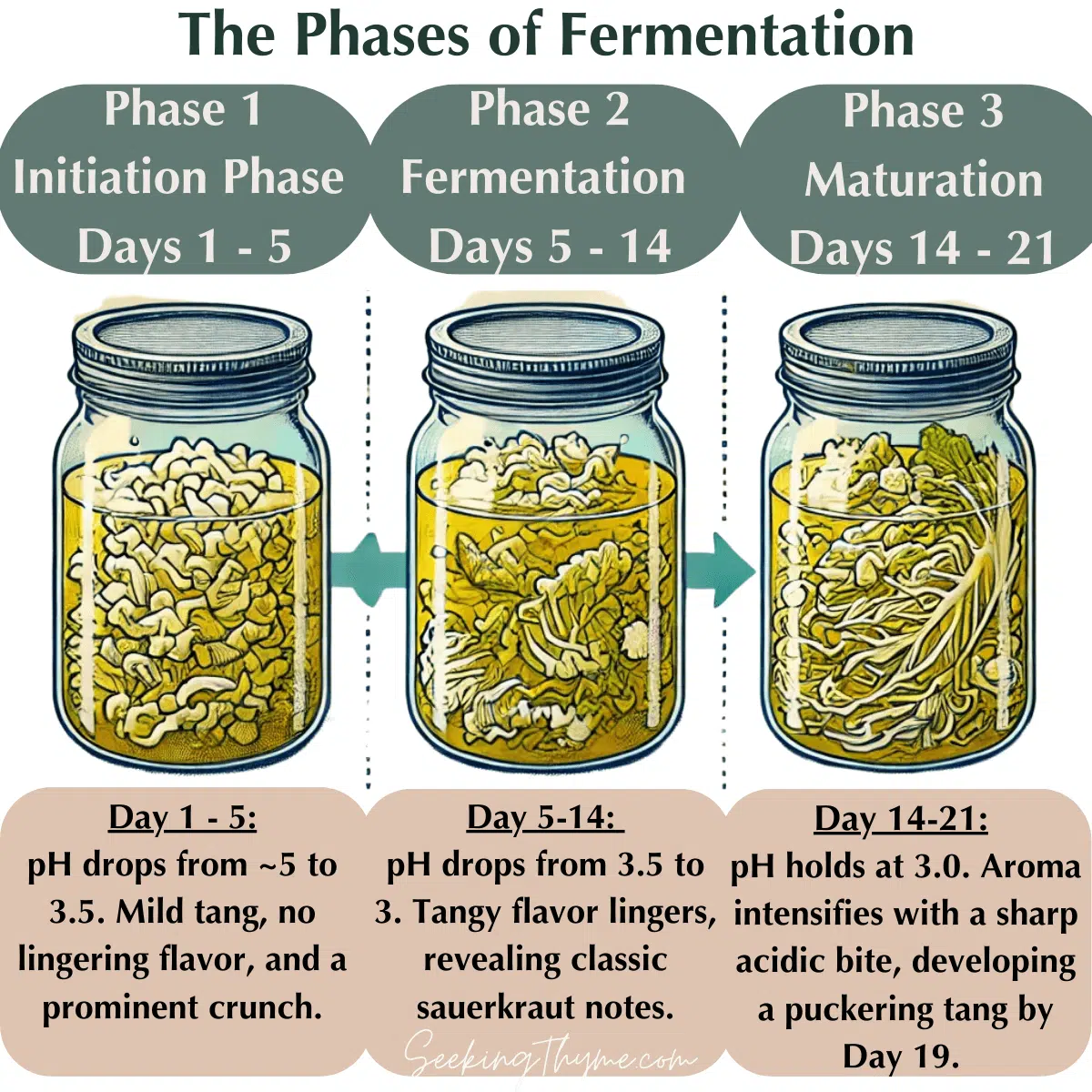
There are three general phases of fermentation, each phase is defined by predominating bacteria, flavor and pH level. A lot happens in phase one and early phase two, which is around 7 – 10 days. This is when the pH drops the most and flavors begin to develop.
Phase one: Initiation phase (Days 1 – 5), Primary bacteria: Leuconostoc mesenteroides
Leuconostoc mesenteroides is a lactic acid bacterium (LAB) known for fermenting sugars into lactic acid and other by-products like carbon dioxide and ethanol. This facultative anaerobe means it survives with and without oxygen, and in high salinity, which means it likes early fermentation.
Initial Fermentation
- At the outset, L. mesenteroides thrives in the salty environment created by mixing cabbage with salt. When cabbage is shredded and salted, L. mesenteroides is among the first bacteria to thrive in the anaerobic environment. It ferments natural sugars, producing lactic acid and carbon dioxide, which lay the foundation for a stable fermentation process.
Acid production & pH
- The pH starts around 4.5-5 and begins to drop around day 4. The lactic acid produced lowers the pH, creating an acidic environment that prevents spoilage while contributing to sauerkraut’s tangy flavor.
- Carbon Dioxide Production: Carbon dioxide release during fermentation can create bubbles or froth on the surface, maintaining the anaerobic conditions essential for fermentation.
Taste & Texture
- There is minimal tang and the kraut is still quite crunchy in the first phase of fermentation, towards the end of phase one I begin to see some changes.
Transition to the next stage
- At cooler temperatures (65–70°F), L. mesenteroides may stay active slightly longer, but as the environment becomes more acidic, it gives way to acid-tolerant bacteria like Lactobacillus plantarum, which dominate the later stages of fermentation.
Health Benefits
- A study in Nature found that L. mesenteroides produces compounds called exopolysaccharides (EPS), which aren’t digested by the body. These compounds improved blood sugar balance and energy regulation by positively influencing gut bacteria and increasing beneficial short-chain fatty acids.
Summary
Leuconostoc mesenteroides plays a vital role in the early stages of sauerkraut fermentation, where it helps to kick-start the process by fermenting sugars into lactic acid, producing carbon dioxide, and beginning the flavor development. Its ability to thrive in anaerobic environments and lower pH conditions makes it indispensable for creating the tangy, probiotic-rich sauerkraut we love.

Phase Two: Fermentation (Days 5 to 14), Primary Bacteria: Lactobacillus plantarum
As sauerkraut continues to ferment, the process becomes more complex, with a shift in bacterial dominance to Lactobacillus plantarum which prefers a more acidic environment and can consume a wide range of carbohydrates.
Acid Production & pH Drop:
- Lactobacillus plantarum takes the lead in this phase, producing lactic acid that further lowers the pH, though Lactobacillus mesenteroides may still play a supporting role. The pH gradually drops to about three as the days progress through phase two.
- The pH drop ensures safe preservation and inhibits harmful bacteria, while the cabbage becomes softer and more pliable.
- As fermentation intensifies, carbon dioxide is released, resulting in bubbling and the expansion of the kraut.
- It’s important to ensure that gas can escape, especially in sealed containers.
Taste & texture
- The kraut’s flavor becomes more pronounced, developing an earthy, mellow sourness alongside the sharp tang. Though this tang doesn’t linger too long on your tongue.
- The cabbage softens, retaining a satisfying crunch with a more complex texture.
Transition to the next stage
- Fermentation slows, and Lactobacillus plantarum continues to dominate, preparing the kraut for its final maturation phase.
Health Benefits
- Lactobacillus plantarum is known for promoting gut health, with benefits that lower HbA1C and blood pressure.
- Studies show L. plantarum contributes to improved immune function and overall digestive health, while the fermentation process preserves nutrients like vitamin C.
Summary
I often find that towards the latter part of phase two I’m quite pleased with my sauerkraut ferment. Generally the pH is 3 or so, therefore it’s safe, the flavor and texture are appealing to me and occasionally I consume it now, sometimes I wait.

Phase three: Maturation (Days 14 to 21), Primary Bacteria: Lactobacillus brevis
As fermentation stabilizes, the final maturation phase begins, focusing on the deepening of flavor and further microbial transformation. Lactobacillus brevis becomes more prominent during this phase, continuing the fermentation process and contributing to flavor maturation.
Acid production & pH
- The pH stabilizes at around three, with the acidity reaching its peak, ensuring preservation and safety.
- Minimal bubbling occurs as fermentation slows.
Taste & texture
- The flavor evolves, becoming more mellow and complex, with a deep, tangy profile. You almost want to pucker with a few bites, definitely a longer lasting tang to a sauerkraut that has fermented to maturation.
Health Benefits
Lactobacillus brevis offers several health benefits:
- It’s generally recognized now that digestive health is improved with the consumption of probiotic rich food, improving conditions such as IBS, IBD and others.
- In addition, L. brevis has been shown to enhance phagocytic activity, thereby boosting the body’s immune response. What’s cool here is this study shows the possibilities of even “dead” probiotics.
- Anti-Inflammatory Effects: Studies suggest that L. brevis can mitigate inflammatory conditions, such as those associated with inflammatory bowel disease (IBD) by increasing anti inflammatory cytokines and increased tight junctions (which help to “seal” the digestive lining).
Summary
During this final phase the pH holds without further dropping, but the flavor deepens, meaning I find it to linger longer, with a sharper bite.

Health benefits of different fermentation phases
I’ve highlighted various health benefits of the three primary lactic acid bacteria that play a role throughout the fermentation process. An important note is to remember that microbial diversity has been shown to be the most beneficial for overall health and wellness.
A diverse microbiome creates a balanced gut ecosystem that improves digestion and overall resilience. It strengthens the immune system by ensuring that if one bacterial group falters, others can step in. Which means you’re more adaptable and better equipped to fend off harmful pathogens.
How temperature and salt affect sauerkraut fermentation
Sauerkraut fermentation timeline varies based on several factors, so although these three phases will occur if given the time, their duration may vary.
- Temperature:
- Warmer environments accelerate fermentation, potentially shortening each stage.
- Cooler temperatures slow down bacterial activity, extending the fermentation process.
- Salt Concentration:
- Higher salt levels can inhibit certain bacteria, prolonging fermentation.
- Lower salt concentrations may lead to faster fermentation but can risk spoilage if not monitored carefully.
- Cabbage Quality:
- Fresh, high-quality cabbage provides more fermentable sugars, supporting a robust fermentation process.
- Jar Size:
- A larger container might ferment slower, while a smaller jar could speed up the process due to the proximity of the cabbage to the environment.
- Additional spices or ingredients:
- Some added flavors, like acidic tomatoes, speed up the fermentation in my experience. While spices or other ingredients such as garlic may actually slow the fermentation process due to its antimicrobial properties.
For each of these factors I have seen variation. So for application purposes, I think it’s good to be aware of how different scenarios can affect your ferment, but not necessarily will they affect your ferment.
How to tell when sauerkraut fermentation is complete
I always consider safety, taste and texture when determining if my sauerkraut is complete. Finished sauerkraut has a pH of 3 – 3.5 in my experience. The taste is tangy and deep. The texture is softened, though this varies based on the initial thickness of the cabbage. And the smell is acidic, a pleasant vinegar smell. Visually, your kraut is free of mold or other signs of spoilage.
Understanding the sauerkraut fermentation timeline allows for better control over the process, leading to a final product that is both safe and flavorful. By monitoring factors like temperature, salt concentration, and fermentation duration, you can tailor your sauerkraut to your taste preferences and ensure consistent results.
If you’re new to fermentation I have several resources to help get you feeling confident in the kitchen, like my blog on “Pickled vs. Fermented: What’s the Difference” and “Mastering the Lacto fermentation Salt Ratio“. Be sure to let me know if this was helpful by leaving a comment.

great article I just put the lid on my first jar of sauerkraut
I hope it turns out, read my related article to be sure you do some key things for success! https://seekingthyme.com/red-cabbage-sauerkraut/
I’m a information gatherer and you certainly put everything in a nutshell. Thank you. I love to make recipes that are wellness related, but so often I’m left in too much info but not organized. Thanks to your information I now feel confident to proceed.
I love this, thank you for your kind words!