Simply put, fermented foods are a type of pickled food, but not all pickled foods are fermented. Let me explain the differences between pickled vs fermented foods, including how they’re made, their nutrition, and taste.
Definitions: pickled vs fermented
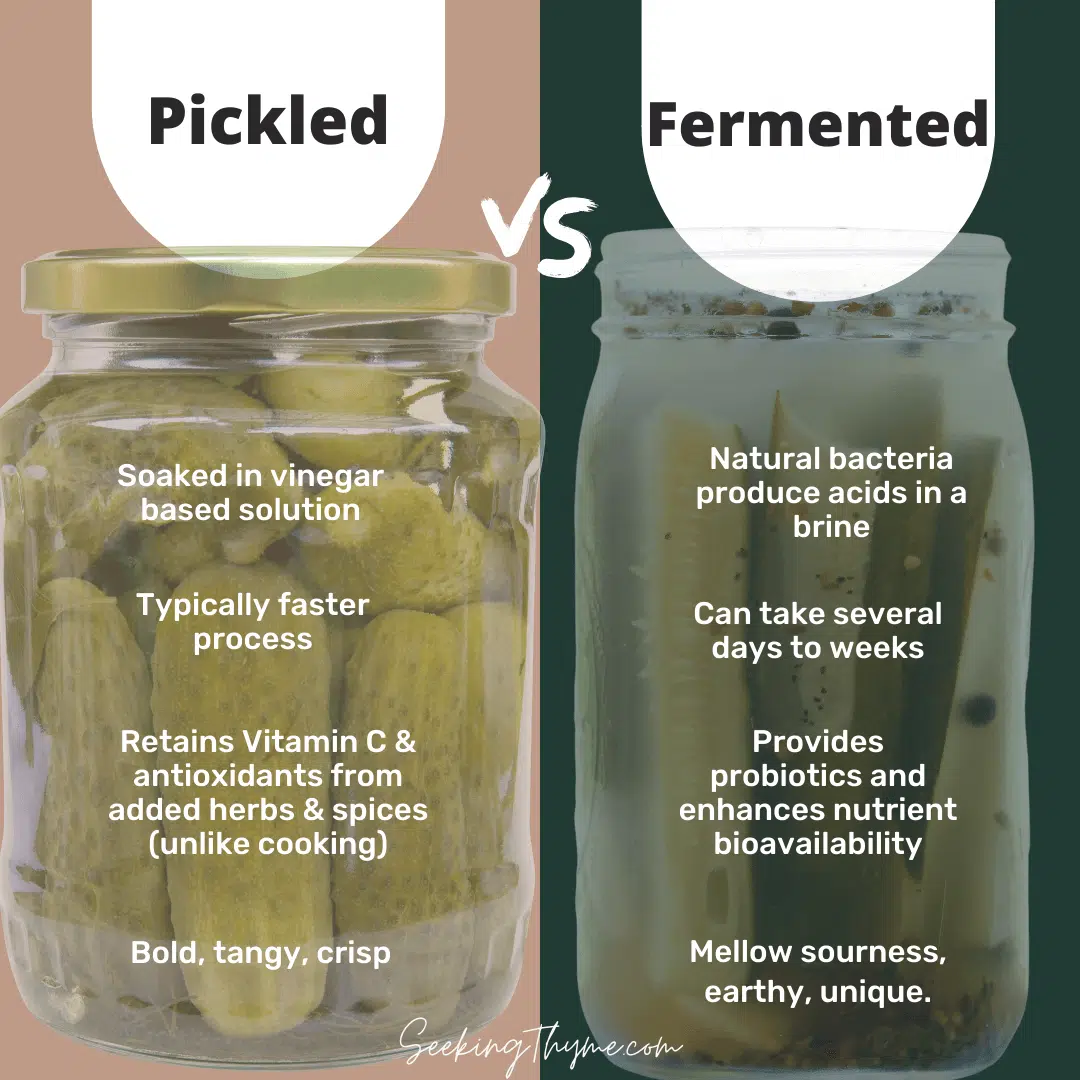
- Pickled: The term “pickle” comes from the Dutch word pekel, meaning brine. Historically, “pickled” was used the same way as “fermented.” Today, it usually refers to soaking food in a sour liquid, like vinegar, to preserve it and give it a tangy flavor.
- Fermented: Fermentation happens when good bacteria eat the sugars in food and break them down. One part turns into acid, which makes the food tangy. Another part becomes carbon dioxide gas (CO₂), which creates bubbles and gives some fermented foods, like kombucha, their fizzy texture.
Health Benefits of Pickling vs. Fermentation
Both pickled and fermented foods offer unique health benefits, making them valuable additions to your diet, but they shine in different ways.
Fermented foods are celebrated for their live probiotics, which support gut health, improve digestion, and may even boost your immune system. Plus, an added bonus from home fermentation is the unique bacteria that reside on your plants, especially if home grown.
They also enhance the nutrient profile of foods, increasing nutrient bioavailability and creating beneficial compounds during fermentation.
Pickled foods, on the other hand, are a simple way to increase vegetable intake while adding antioxidants from added herbs and spices. Or retaining vitamin C that might otherwise be lost during cooking.
Also, if pickled foods are made with unpasteurized apple cider vinegar, they may even contain some live probiotics. However, it’s important to note that heat treatments like canning can destroy these beneficial bacteria, so the probiotic perks depend on the preparation method.
Want to learn more about the specific nutrient advantages of each, with research-backed insights? Check out my full guide: Pickled vs Fermented: Health Benefits.
Flavor Differences
Pickled Foods: When you bite into a pickled cucumber, the first thing you’ll notice is that sharp, almost instant tang. This comes from the vinegar or acidic brine, which gives pickled foods their bold and crisp flavor.
It’s a bright, clean sourness that hits you right away—perfect for those who love that quick burst of tang.
The addition of spices, like garlic, dill, or mustard seeds, can also add layers of flavor, making each bite just a little more exciting. Pickled onions, for example, bring in a zesty flavor with a bit of a savory twist, while pickled peppers might give you a pleasant, spicy kick.
Fermented Foods: The sourness is more mellow but can linger, unlike pickled foods, and develops over time. As the food ferments, you’ll notice an earthy richness and sometimes even a subtle umami flavor.
You might even notice a bit of fizz from the carbon dioxide produced during fermentation.
The longer the food ferments, the more its flavors can transform into something truly unique, with layers of sourness and depth that aren’t immediately obvious but become more interesting the more you eat. Plus, no two home ferments will taste the same.
Processes explained
Pickling Process:
- Use of Vinegar-Based Brine: When you pickle foods, they’re typically submerged in a brine made of vinegar, water, salt, and spices. The acidity of the vinegar prevents harmful bacteria from growing, keeping your food safe while giving it that tangy flavor we love.
- Heat Treatment to Ensure Sterility: Sometimes, for long-term storage, the pickles are heated, typically by pressure canning.
However, here’s an important distinction: heating is not part of the fermentation process, and it can actually kill off the beneficial probiotics that are crucial for fermentation. So while pickles can last a long time after being canned, they won’t offer the same gut-friendly probiotics as fermented foods.
- Shorter Preparation Time: Pickling is a relatively quick process. Once you prepare the brine and submerge your vegetables, they’re often ready to eat in just a few hours to a couple of days. It’s all about how quickly that tangy vinegar flavor develops!
Fermentation Process:
- Use of Salt to Create a Brine: In fermentation, instead of vinegar, you use a saltwater brine. The salt draws moisture out of the food, creating an environment where natural bacteria (like lactobacillus) can flourish. These bacteria are already present on the food, and they do the hard work of breaking down sugars into lactic acid, which gives fermented foods their signature tang.
- Natural Bacteria (e.g., Lactobacillus) Facilitate Fermentation: The beneficial bacteria consume sugars in the food and produce lactic acid, which not only preserves the food (by lowering the pH) but also gives it that unique, sour flavor. These beneficial bacteria also outcompete harmful bacteria by occupying the available space and using up nutrients, making it harder for bad bacteria to thrive.
- Longer Fermentation Period: Unlike pickling, fermentation takes time—typically ranging from several days to weeks, depending on the food and conditions. During this time, the flavors develop and the beneficial bacteria multiply, making fermented foods both tastier and healthier the longer they ferment.

Food Safety: The Role of FATTOM in Pickling and Fermenting
When making pickled or fermented foods at home, food safety is crucial. The mnemonic FATTOM helps explain the key factors that influence bacterial growth:
- Food: The type of food you’re preserving, which provides nutrients for bacteria. Choose fresh, high-quality ingredients to reduce the risk of contamination.
- Acidity: Both pickling and fermentation create acidic environments that help prevent harmful bacteria. You must ensure the food stays at the proper level of acidity during the process to keep it safe.
- Time: Time is important because harmful bacteria can quickly multiply if proper care isn’t taken. This is why regularly checking on your ferments and maintaining proper pickling conditions is essential to ensure safety.
- Temperature: Temperature control is critical. Too high or too low a temperature can promote harmful bacteria, while the right temperature helps the fermentation or pickling process proceed safely.
- Oxygen: Oxygen levels can affect which bacteria thrive. Fermentation can occur both in the presence of oxygen (aerobic) and without oxygen (anaerobic), so managing oxygen exposure is key to encouraging beneficial bacteria.
- Moisture: Both pickling and fermentation rely on moisture to allow bacteria to work, but excess moisture can encourage spoilage. Ensuring the food is submerged in brine or liquid and properly sealed is vital for safety.
To safely preserve food, all six factors—food, acidity, time, temperature, oxygen, and moisture—must be carefully controlled to prevent the growth of harmful bacteria and ensure the food is safely preserved.
Examples of pickled and fermented foods
Pickled Foods:
- Pickled Cucumbers (Vinegar-Based): Cucumbers soaked in vinegar, salt, and spices for a tangy flavor. No fermentation is involved; they are preserved by the vinegar.
- Pickled Onions: Onions preserved in a vinegar or brine solution, often with spices like mustard or garlic. These are quick to make and tangy but not fermented, often referred to as quick-pickled onions.
Fermented Foods:
- Sauerkraut: Shredded cabbage fermented with salt. Natural bacteria break down the cabbage sugars, creating a tangy flavor without vinegar.
- Kimchi: A Korean dish made from fermented vegetables (usually napa cabbage) with spices and garlic. Fermented naturally without vinegar for a spicy, tangy taste.
- Fermented Pickles (Salt-Brined): Cucumbers fermented in saltwater brine, allowing natural bacteria to develop a tangy, probiotic-rich flavor, unlike vinegar-based pickles.
If you’re shopping for truly fermented pickles, check out my post Are Claussen Pickles Fermented?

FAQs about cheesecloth
Summary: pickled vs fermented
There you have it, the differences between pickled vs fermented veggies! They each have their time and place, and I encourage you to give each a try.
If you’re into making your own home ferments, check out my post on How to Ferment Veggies. Or if you want to find store bought pickles read my post: Are Claussen pickles fermented, hint, they’re not!
I’m a fan of any way you can get more plants, fiber and color into your diet. You pick, and let me know your favorites!