This fermented beets recipe—includes both the root and the greens—is sweet, salty, and brimming with flavor. One of my all-time favorite ferments, beets offer a deep, earthy flavor that transforms beautifully through lacto-fermentation.
My beet ferments do not require boiling your salt solution, or have you adding vinegar. Just the natural process of lacto-fermentation!
If you’re a fellow beet lover, you might also enjoy my method for roasting beets without foil.
In this post, I’ll walk you through how to ferment beets, which types work best, some key nutrition info, and my favorite ways to enjoy them. This recipe includes ginger (a personal favorite), but feel free to omit it—this guide works either way.

Fermented beets benefits
Fermented beets are more than just a tangy treat—they’re a functional food that supports gut, metabolic, and cardiovascular health. Thanks to the process of lacto-fermentation, raw beets are transformed into a probiotic-rich food that may promote a balanced gut microbiome.
Beneficial bacteria like Lactobacillus (the common probiotic “bug” in veggies) produced during fermentation can help support digestive function and immune health by improving the integrity of the gut lining and reducing inflammation in the GI tract.
Beets themselves are naturally rich in folate, potassium, manganese, and dietary nitrates. Nitrates might be beets’ biggest claim to fame. When converted to nitric oxide in the body, these compounds can improve circulation and physical performance—especially when consumed as beetroot juice.
Fermenting beets does not destroy these nutrients—in fact, it may enhance their bioavailability. Some nutrients, like certain minerals, may become more absorbable, and microbes may even produce beneficial compounds like short-chain fatty acids.
Combined with their fiber content, fermented beets may support steady blood sugar, healthy cholesterol levels, and even exercise performance.
Unlike vinegar-pickled beets, which often contain added sugars and are heat-processed, fermented beetroot remains raw and enzyme-rich.
Fermented Beets vs. Pickled Beets
Fermented beetroot is different from pickled beets. I’ve written many posts on this topic, the most popular being Are Claussen Pickles Fermented? So what’s the difference between pickling and fermentation?
Well for a full read up, read Pickled vs. Fermented What’s the difference. To summarize, fermentation is the process of natural acidification (lowering the pH), where beneficial microbes produce lactic acid. Pickling, on the other hand, relies on added vinegar to preserve the food.
Pickled beets may be cooked, or have the vinegar they’re soaked in cooked first, then they marinate.
In contrast, fermented beets have salt added to them, and other ingredients as you wish, and marinate to create their own brine over time.
Nutritionally, the fermentation of beets adds lactobacillus strains of probiotics that can help feed a healthy gut microbiome. There are several strains of lactic acid bacteria (the common type found on beets), and they offer several health benefits including improved nutritional value of food, control of intestinal infections, improved digestion of lactose, control of some types of cancer, and control of serum cholesterol levels.
Changing Texture and Fermentation Time: Grating vs. Dicing vs. Slicing
The way you cut your beets before fermenting can have a noticeable impact on both the fermentation timeline and the final texture. My fermented carrots are a good example, I alter the size of the veggie to get a different outcome.
Here are some variations of this fermented beets recipe.
- Grated beets ferment the fastest—often within about 5 days—thanks to the increased surface area that makes it easier for beneficial bacteria to work their magic. The result is a softer, more uniform texture with a bit of a tangy slaw-like vibe.
- Sliced beets (about ⅛ to ¼-inch thick) usually take around 10 to 14 days to fully ferment and retain a pleasantly crisp bite, perfect for layering onto salads or sandwiches.
- Diced beets, depending on the size of the cubes, tend to fall somewhere in between—usually ready in about 7 to 10 days. They soften nicely while still keeping some structure, making them great for mixing into grain bowls or serving as a tangy side.
Can You Cook with Fermented Beets?
Technically yes—you can cook fermented beets, but should you? So the facts say temperatures over 110 degrees or so will kill any probiotics, with slight variation amongst strains. However, other research suggests that maybe even dead bugs are beneficial (sort of gross to think about…) This blog discusses heating probiotics, and does a nice job of explaining it.
Nonetheless, my suggestion would be to enjoy your ferments in their raw, uncooked state. We eat enough cooked foods, this provides some good variety and ensures that other benefits like antioxidants remain intact.
How to Enjoy Fermented Beets
My favorite, daily way to enjoy ferments is at lunch, with eggs of any form!
There isn’t any conclusive data on how much fermented food we should be eating daily. But, it’s wise to eat small frequent amounts, for both tolerance, and consistent intake of fiber. One study shows as little as ½ cup of fermented veggies will make an impact on our gut microbiome.
Other ways to enjoy your beet fermentation:
- Paired with eggs (my favorite lunch combo!)
- Tossed into salads or grain bowls
- Served as a tangy side or slaw
- Blended into hummus or beet dip
- Layered with goat cheese and yogurt (try cilantro too!)
- Used in a sandwich or wrap
- Brine added to salad dressing or taken as a gut-healthy shot
A small daily serving—just ½ cup—can positively impact your gut microbiome.
These Are Raw, Uncooked Beets
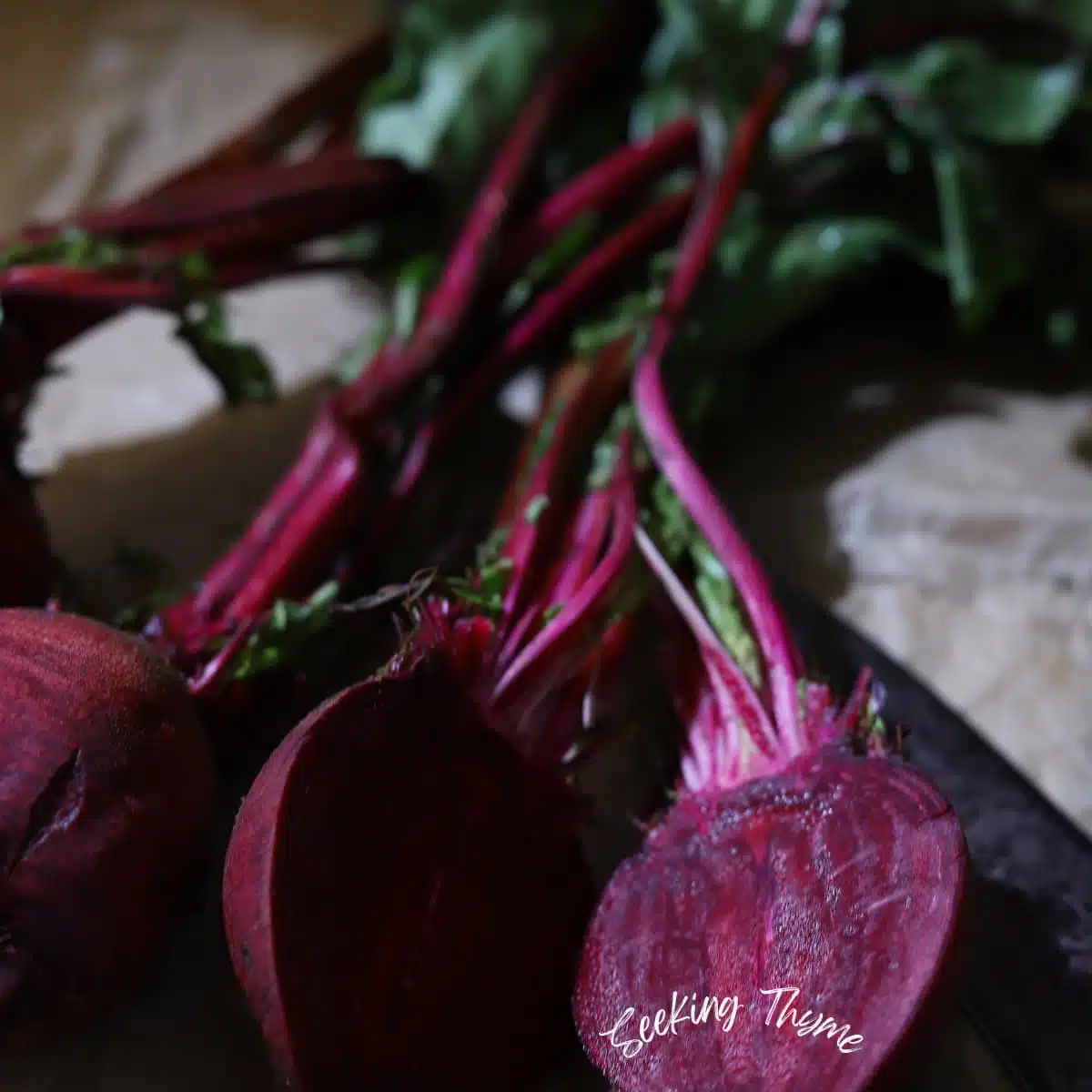
Unlike roasted or boiled beets, fermented beetroot is never cooked. Fermented beets are raw, and will soften as the bugs ferment their sugars over time.
Using sliced beets or cubed beets will change the duration of the ferment, as well as the texture. Larger pieces of beet initially will be more firm, than shredded or julienned beets that are smaller and have more surface area.
Best Kind of Beet to Use
- Red beets: Most common, earthy flavor, vibrant color.
- Golden beets: Milder and slightly sweeter, great for lighter ferments.
- Chioggia (candy stripe): Beautiful color but can fade during fermentation.
- A tip to buying your beets: look for fresh, firm beets with unblemished greens attached for best quality.
FAQs About Fermented Beets
Yes—great for gut health, blood pressure, and digestion!
Depends on cut size and temperature; 5–14 days is typical.
No—fermentation is raw and probiotic-rich; pickling uses vinegar and may include cooking.
Earthy, salty, slightly sweet and sour with a little funk—like tangy beet kraut.
Summary
Fermented beetroot and beet greens are easy to make, oh-so flavorful, and a great way to get in more veggies and phytonutrients—all while supporting your gut microbiome. So let’s make our fermented beets, and greens recipe!


Fermented Beets (+ Greens) Recipe
Equipment
- Chefs Knife
- Measuring Scoops & Spoons
- Medium mixing bowl
- Pint Size Glass Fermentation Jar
- Funnel, optional
Ingredients
- 2 whole beets + 2 green stalks stalk and greens = 11.3 ounces (320 grams)
- 1 1/2 tsp salt, non-iodized
- 1/2 tsp fennel ,crushed (measure before crushing)
- 1" fresh, ginger ,about 1 tsp
Instructions
- Shred beets, with a cheese grater and chop greens into bite sized (1") pieces. *See notes for variations.
- Salt, mix well and let rest for 5 – 10 minutes, while you prepare the spices.
- A little brine should be created while resting. Once that happens, add the mixture to a pint sized jar and press down with wooden rolling pin, clean fist (or similar) to create juices that will cover the beets.
- Cover with a clean, unblemished beet green, or other fermentation weight. And top with a lid, ideally plastic, metal will corrode.
- Place in a room temperature, dark location (not direct sunlight). Check around day 5. Once you reach the level of fermentation you enjoy, transfer to the fridge and enjoy within a couple months – but I promise they won't last that long!
Notes
- You may choose to chop or slice your beets, if you do, just be sure you end up with ~11 ounces, or around 1 1/2 cups of cut veggies. With this amount, you will use 2 % salt mixture, which means 320grams of veggies = 6.4 grams of salt = ~1 1/2 tsp salt.
- My fermentation timeline with grated beets:
Day 4 : ph 4 – flavor good, began creating bubbles and additional brine yesterday – spilled over a bit. I like the fennel and ginger, mild flavor.
Day 6 : pH 1 – really good, slightly sweet, earthy yumminess!!! Ready to transfer to the fridge.